
When shipping a vehicle to another state, one of the most important decisions you’ll make is choosing between open auto transport and enclosed auto transport. Both options are widely used, safe, and reliable – but they serve different needs, budgets, and vehicle types.
This guide breaks down the differences between open vs enclosed auto transport, including cost, protection level, transit time, and which option is best for your situation.
What Is Open Auto Transport?
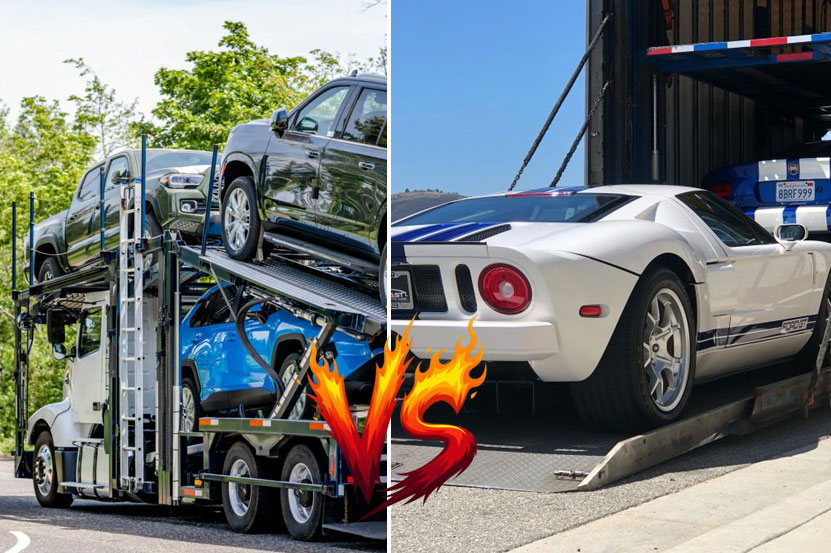
Open auto transport is the most common and affordable method of shipping a car. Vehicles are transported on an open-air trailer, usually carrying 7–10 cars at a time.
You’ve likely seen these carriers on highways delivering cars to dealerships.
Pros of Open Auto Transport
- Lowest shipping cost
- Widely available nationwide
- Faster scheduling due to higher carrier availability
- Suitable for most standard vehicles
Cons of Open Auto Transport
- Vehicle is exposed to weather (rain, sun, snow)
- Minor exposure to road dust or debris
Despite the exposure, damage is rare, and open transport remains a safe and industry-standard option.
What Is Enclosed Auto Transport?
Enclosed auto transport uses fully covered trailers to shield vehicles from external elements. These carriers typically transport fewer vehicles, allowing for extra care and security.
Pros of Enclosed Auto Transport
- Maximum protection from weather and road debris
- Ideal for high-value or rare vehicles
- Often includes lift-gate or soft-strap loading
- Reduced risk of cosmetic damage
Cons of Enclosed Auto Transport
- Higher cost compared to open transport
- Limited availability in some regions
- Longer scheduling times in certain seasons
Open vs Enclosed Auto Transport: Side-by-Side Comparison
| Feature | Open Auto Transport | Enclosed Auto Transport |
| Cost | Lower | Higher (30–60% more) |
| Protection | Basic | Maximum |
| Availability | Very high | Limited |
| Vehicle Types | Standard cars, SUVs, trucks | Luxury, exotic, classic cars |
| Transit Speed | Faster on average | May take longer |
Cost Difference Between Open and Enclosed Transport
The price gap is one of the biggest deciding factors.
- Open auto transport typically costs $0.60–$1.00 per mile
- Enclosed auto transport typically costs $1.00–$1.80 per mile
Prices vary based on distance, vehicle size, route demand, and time of year. Enclosed transport is usually 30–60% more expensive than open shipping.
Which Option Is Best for Your Vehicle?
Choose Open Auto Transport If:
- You’re shipping a daily driver
- Your vehicle has standard value
- You want the most affordable option
- Minor cosmetic exposure isn’t a concern
Choose Enclosed Auto Transport If:
- You’re shipping a luxury, exotic, or classic car
- The vehicle has high monetary or sentimental value
- You want maximum protection
- The car has low ground clearance
Safety and Insurance Coverage
Both open and enclosed auto transport carriers are required to carry cargo insurance. Coverage limits vary by company and trailer type.
Before booking, always:
- Ask for proof of insurance
- Understand coverage limits
- Ask about deductibles
Enclosed carriers often provide higher coverage limits due to the value of vehicles transported.
Is Enclosed Auto Transport Worth the Extra Cost?
For most standard vehicles, open auto transport is more than sufficient and widely trusted. However, enclosed transport is worth the investment when protecting a high-value vehicle from even minor cosmetic risks.
Think of enclosed shipping as insurance for peace of mind.
Final Thoughts
The choice between open vs enclosed auto transport depends on your budget, vehicle type, and protection needs.
- Open auto transport is cost-effective, fast, and reliable for most cars
- Enclosed auto transport offers premium protection for valuable or specialty vehicles
By understanding the differences, you can confidently choose the car shipping option that best fits your needs.